If search can summarise your page, some of that page's job has gone. The rest of the job is more valuable than it was, and most websites aren't built for it.
For twenty years, the deal was simple. Publish a useful answer, rank for the question and collect the visit. AI search breaks part of that deal, because the answer can now arrive before anyone reaches your page.
That doesn't make websites obsolete, but it does change the job.
The easy questions are leaving
"What is a marketing funnel?" doesn't need a click anymore. Neither do most definitions, generic checklists or articles written mainly to contain a keyword. If a page says what every other page says, a summary can replace it, and nobody loses anything.
It's uncomfortable, because a lot of business blogs are made of exactly these pages.
The hard questions are staying
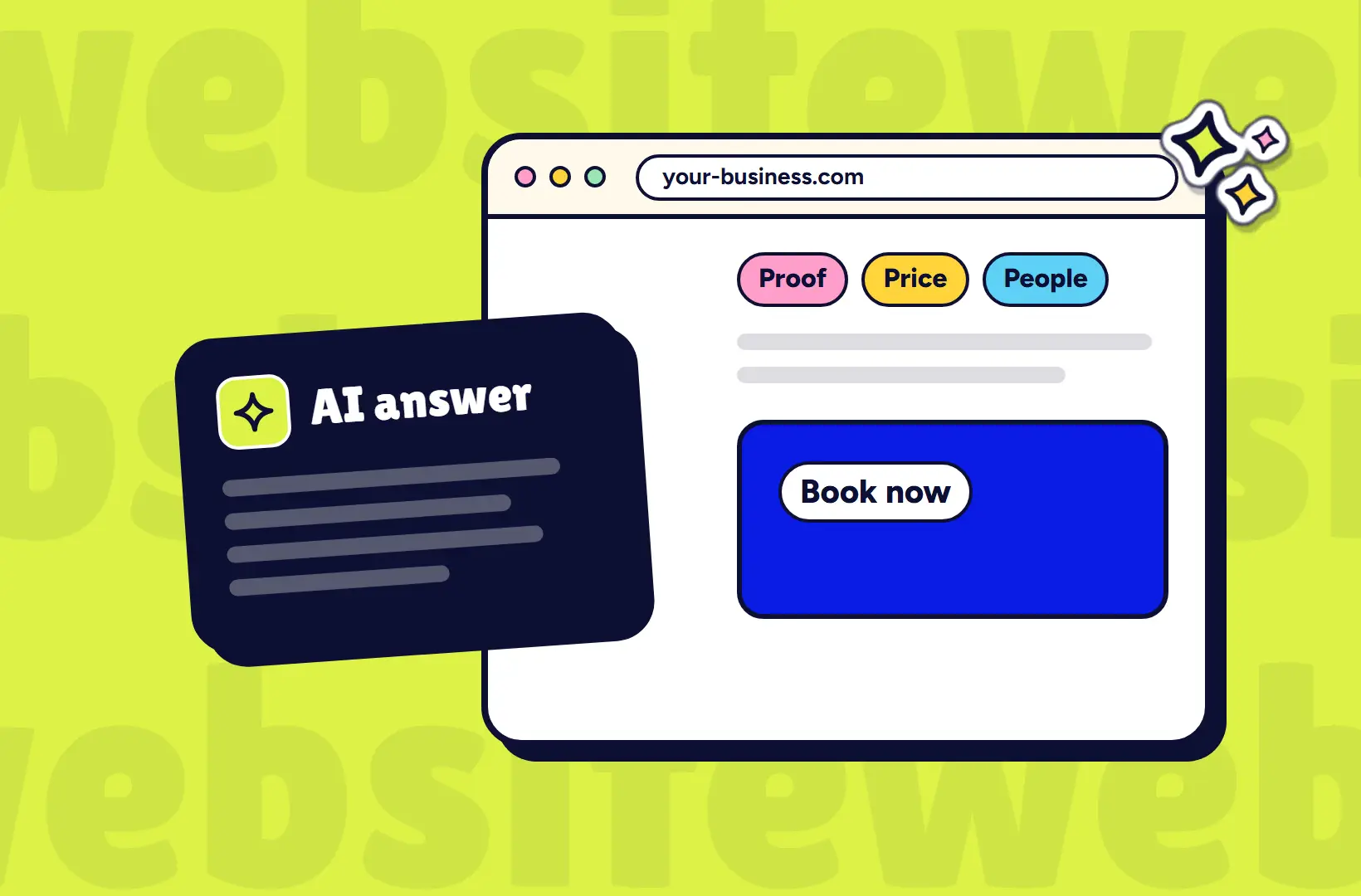
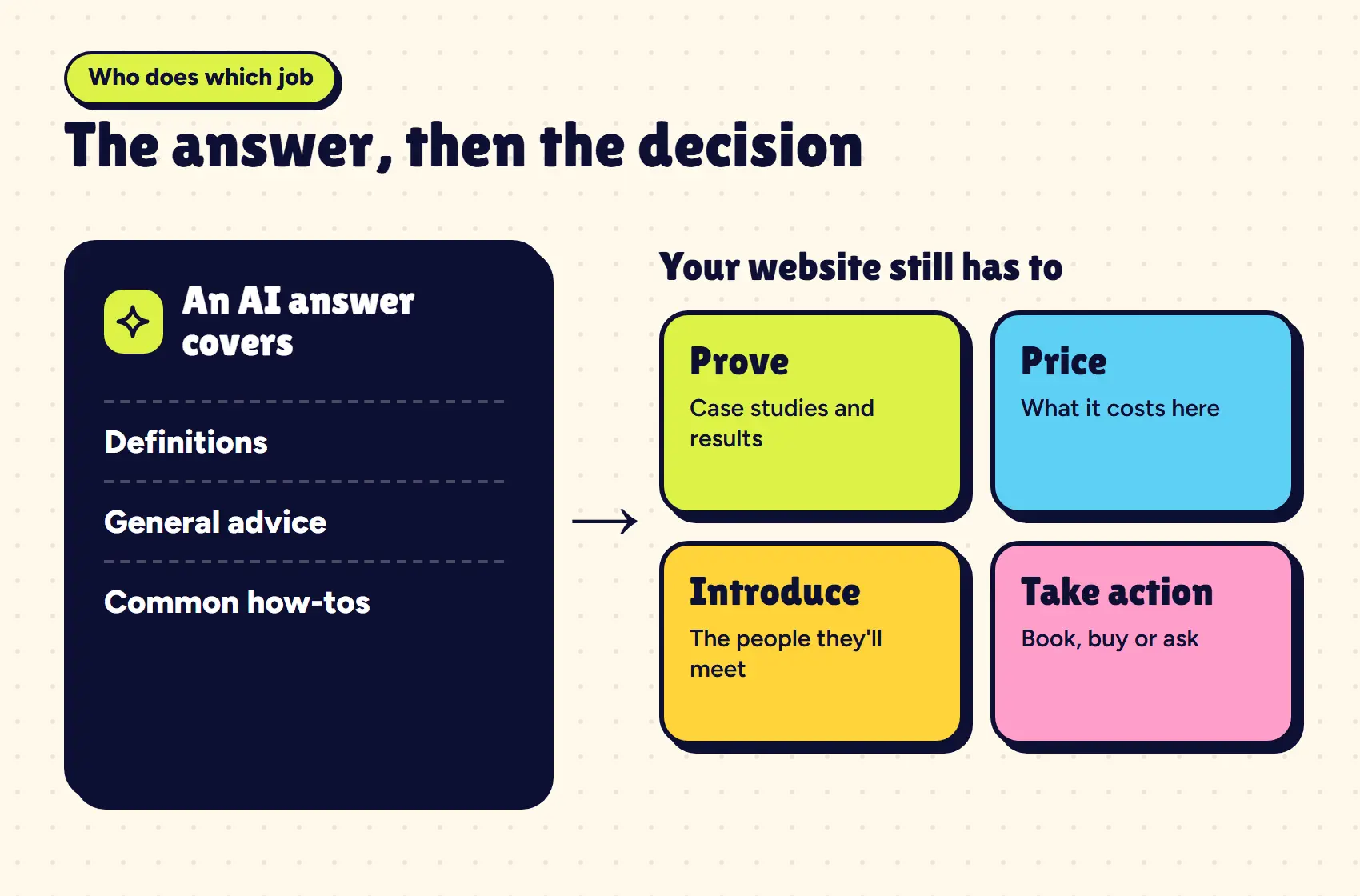
Nobody chooses a clinic, an accountant or a contractor from a summary alone. The last mile of a decision needs things an AI answer can only point at: proof, price, people and a way to act.
That's the work your website is left with, and it's the more valuable half. Someone who arrives after reading a summary already knows the basics. They've come to decide.
Rank your pages by what a summary can't replace
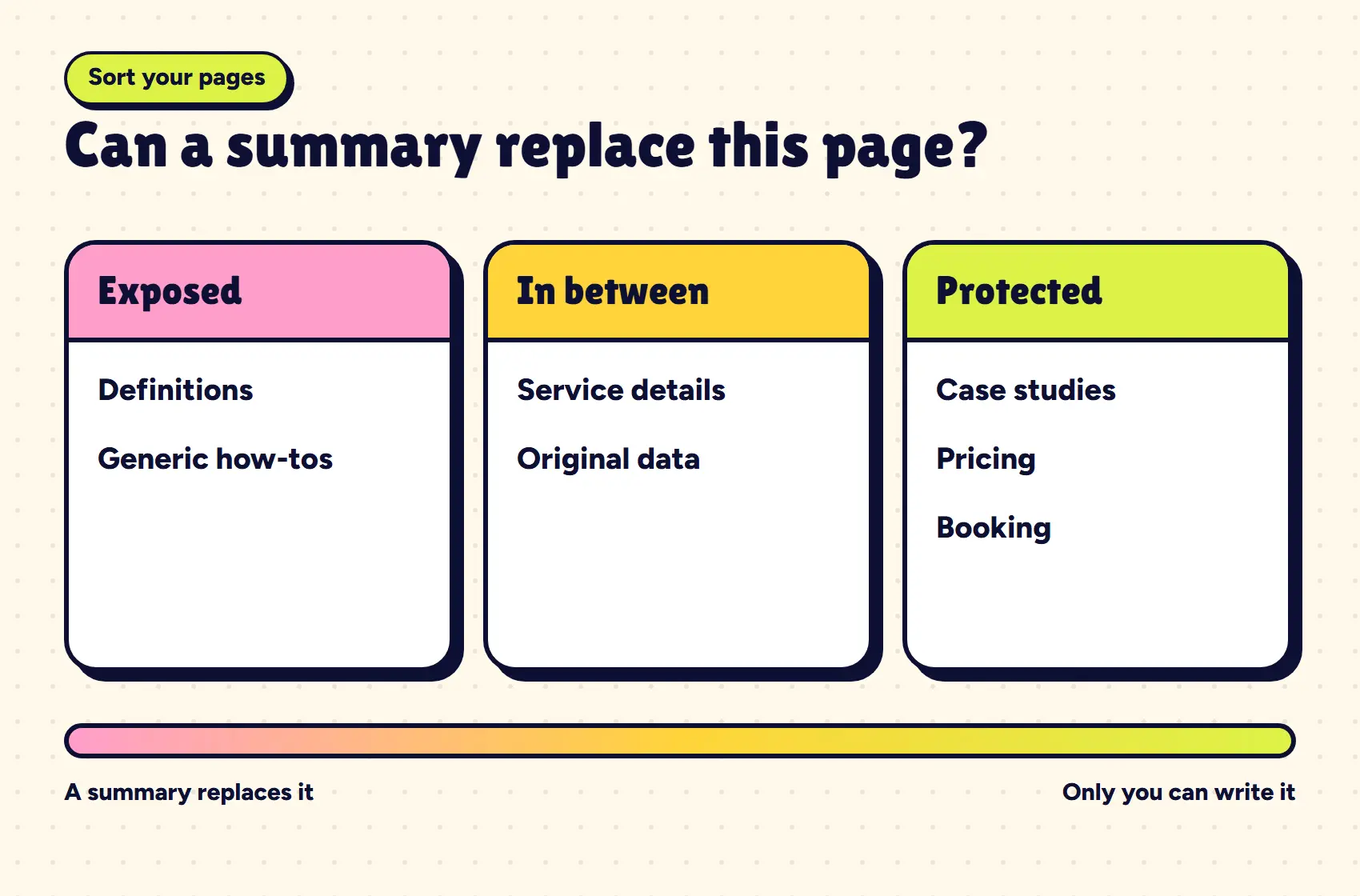
Go through your site and sort each page honestly. Generic explainers are exposed, however much traffic they brought last year. Case studies, pricing, service details, team pages, original research and booking forms are protected, because they contain things only you know.
This matches Google's own guidance, which leans on original, first-hand material over common knowledge. It's also simply better marketing.
Write for the person who already knows the basics
Stop opening with the definition. Assume the reader has the summary and tell them what the summary couldn't: what it costs here, what goes wrong, who you've done it for and what happens after they get in touch.
A site like that may bring fewer visitors than the old one, and that's fine as long as more of them become customers. Traffic was only ever a stand-in for that.
 That's the note. Plant it somewhere.

Menghorng founded Lify in to give Cambodian harvests a name, and writes about brands, search, social media and payments for farm and food businesses.