Shoppers are starting to send an AI to compare and buy for them. An agent can't squint at a photo or ask in chat, so the businesses it picks will be the ones whose facts are written down.
For most of the last decade, selling online meant persuading a person who was scrolling. A new kind of shopper is starting to turn up: an AI assistant, sent by that person to find, compare and sometimes buy on their behalf.
This is already being built
In January, Google announced the Universal Commerce Protocol, an open standard that lets an AI agent go from finding a product to paying for it, developed with Shopify, Etsy, Wayfair, Target and Walmart. Checkout through it is open only to selected US merchants for now, and Google lists food among the next industries it is coming to.
None of that reaches a rice mill in Battambang this month. But the direction is clear, and getting ready for it is the same work that makes a business easier to buy from today.
An agent can't guess
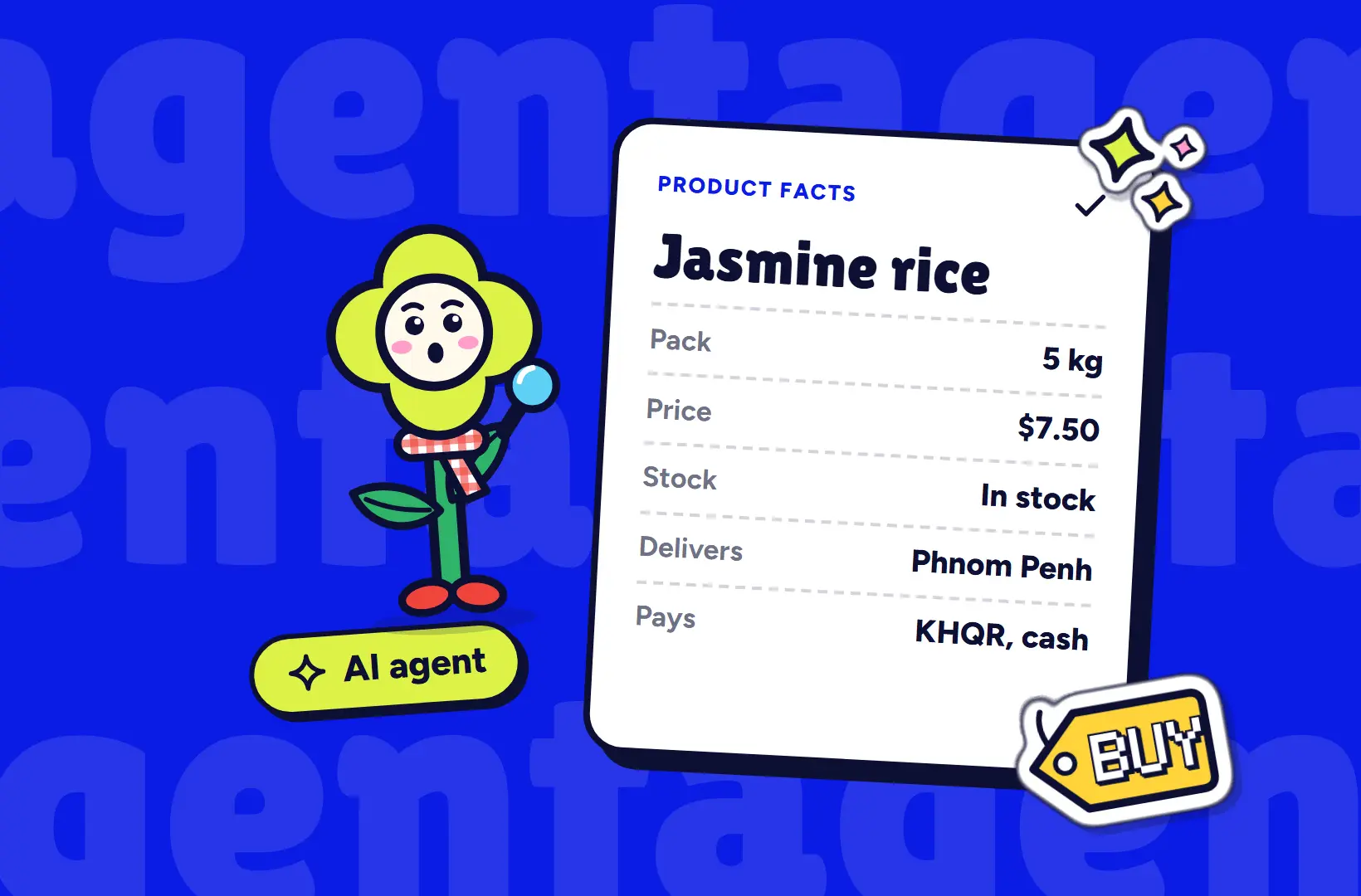
A person looking at your Facebook post can read a price off a photo, work out the pack size and message you about delivery. An agent does none of that well. It works from text it can find and trust: what the product is, what it costs, how much is in the pack, whether it's in stock, where you deliver and how people pay.
If those facts live only in a photo, a caption that says "DM for price" or your staff's heads, the agent either skips you or fills the gaps itself, and not always correctly.
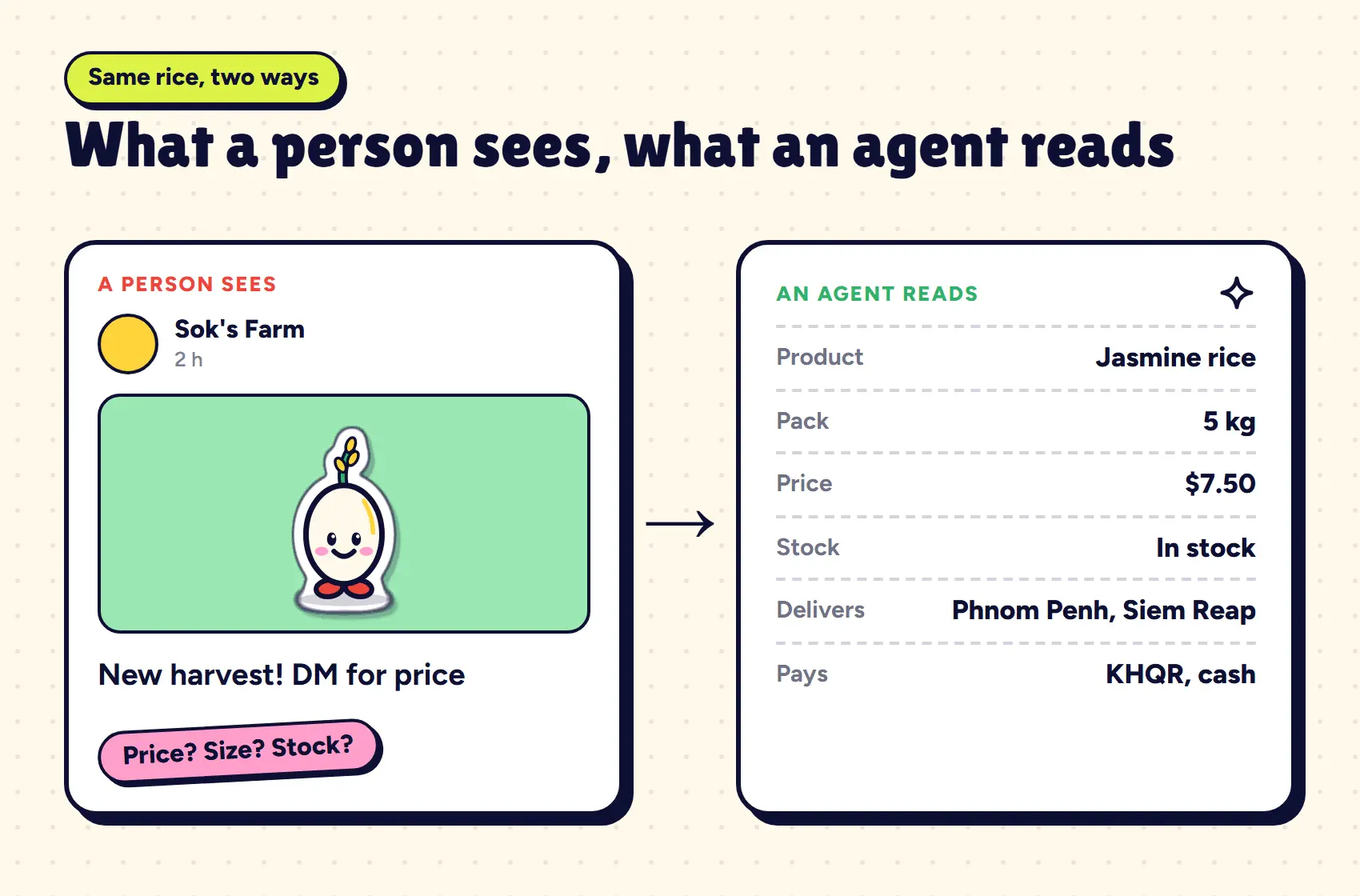
Write the facts down once, then use them everywhere
- One page per product. Give every product its own page or listing, with the price written as text rather than only inside an image.
- The same numbers everywhere. Use the same name, pack size and price on your website, Google Business Profile, Facebook page and any marketplace. Conflicting numbers make an agent less sure of all of them.
- Answer the questions buyers always ask. Delivery areas and times, minimum order, payment methods, origin and any certifications.
- Keep stock honest. An agent that sends a buyer to something sold out has a reason not to send the next one.
Ask the assistants about yourself every month
According to a Publicis Sapient guide, only 37% of consumer-goods leaders check every month how AI assistants describe their brand. It takes ten minutes. Ask ChatGPT, Gemini and Google's AI Mode what your customers would ask: where to buy your product near them, what it costs, how it compares with the brand next to it on the shelf. Write down what's wrong, then fix the page the wrong answer came from.
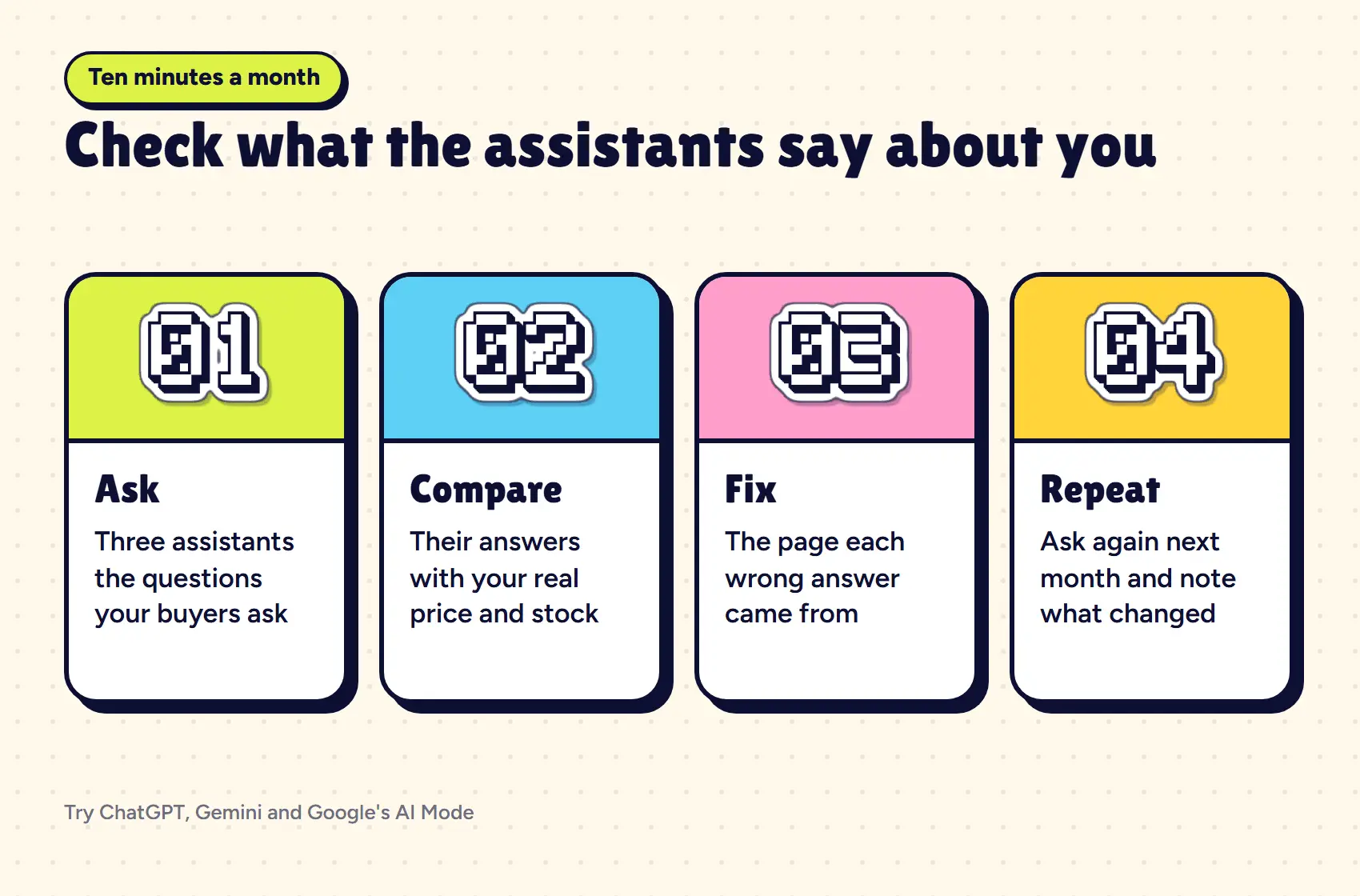
People still decide, for now
Shoppers aren't handing over their wallets wholesale. In Adobe's 2026 survey of 4,000 consumers, fewer than half (43%) said they would use a brand's AI agent when offered one. That's the window to get your facts in order, while the stakes are low and the same work already helps the human buyers you have.
 That's the note. Plant it somewhere.

Menghorng founded Lify in to give Cambodian harvests a name, and writes about brands, search, social media and payments for farm and food businesses.