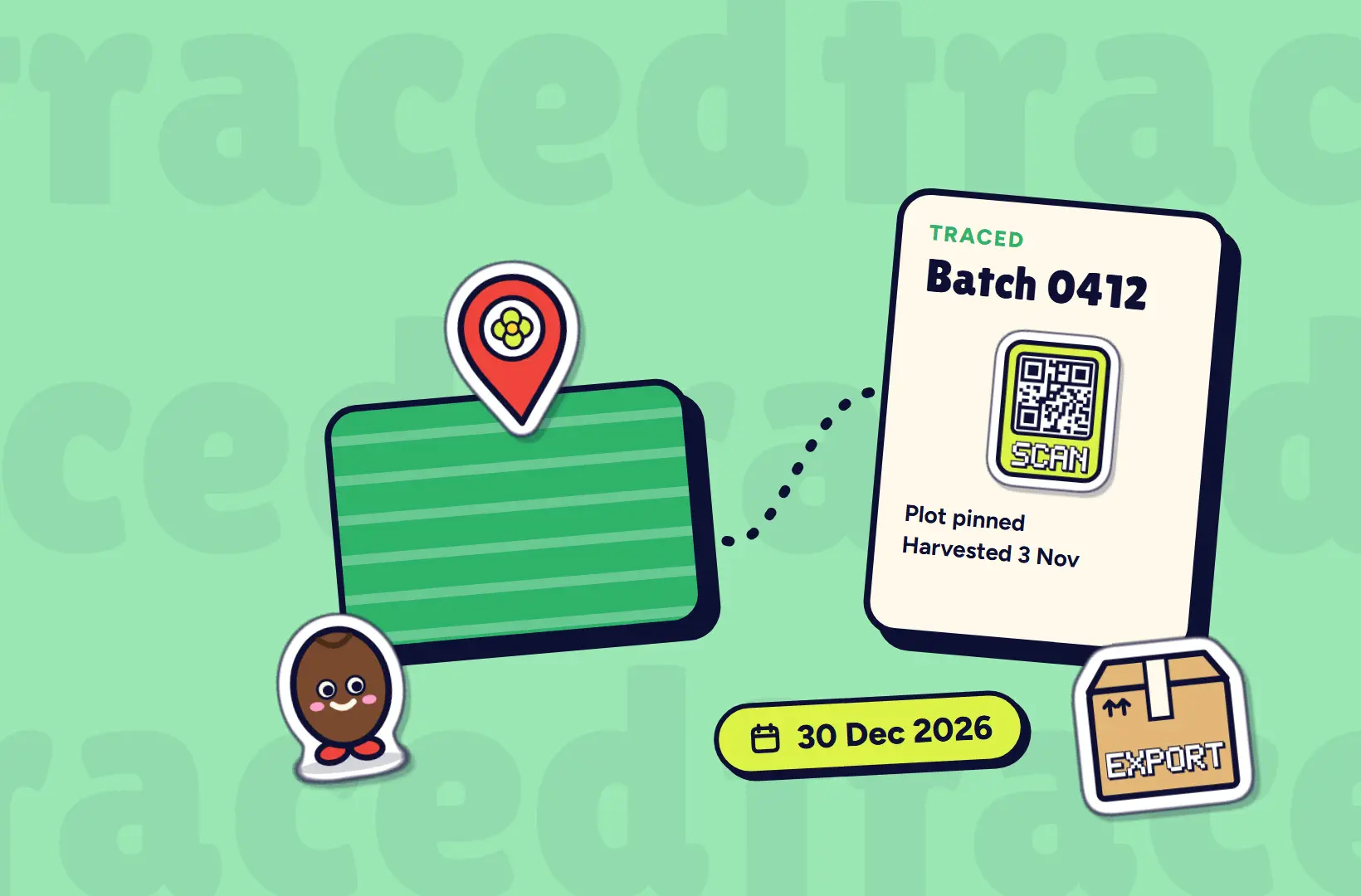
From 30 December, larger companies selling rubber, coffee, wood and four other commodities into the EU must prove where they were grown. The suppliers who can show that easily will be the ones buyers keep.
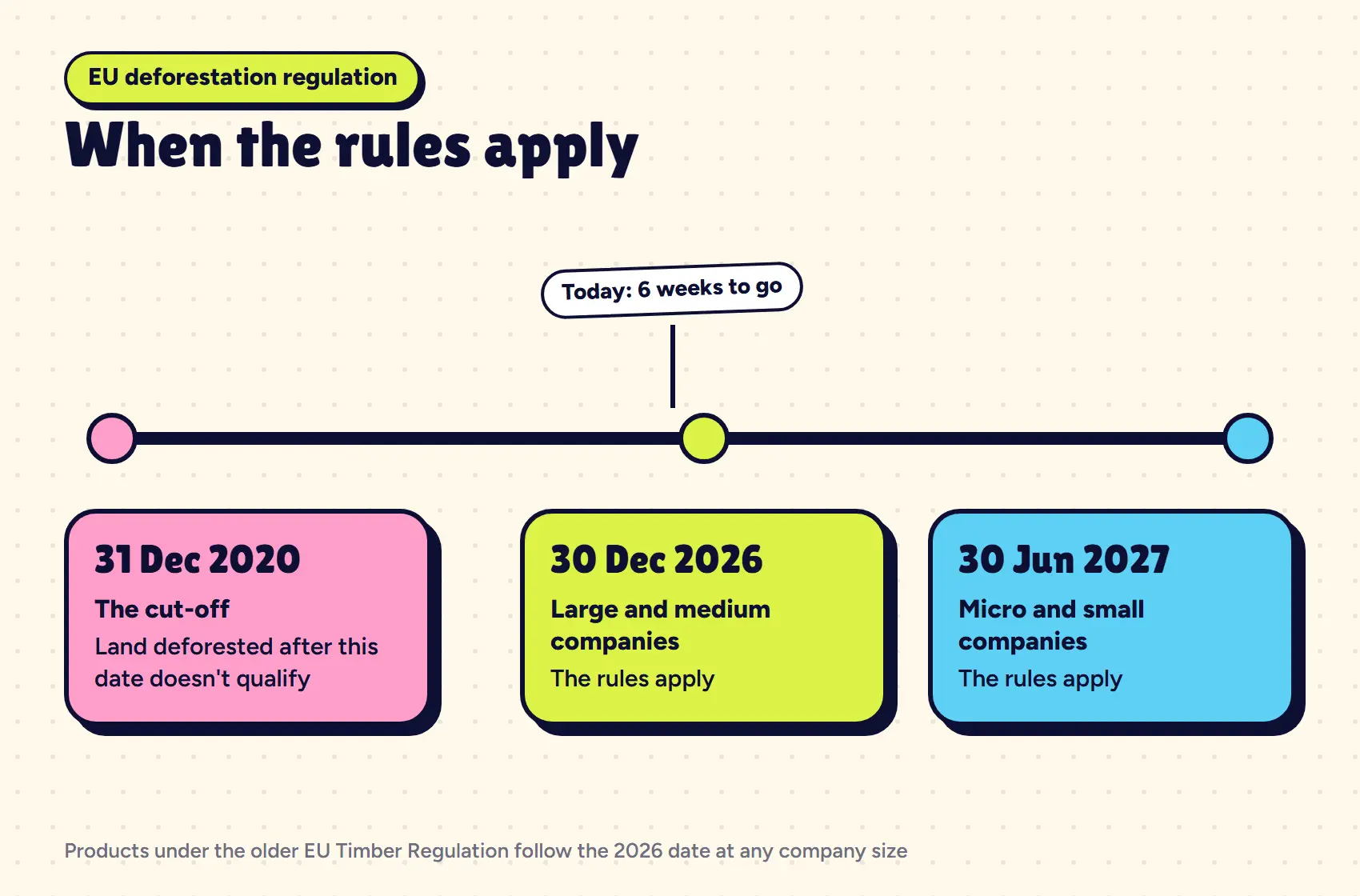
After two delays, the EU's deforestation regulation (EUDR) now applies from 30 December 2026 to large and medium companies, and from 30 June 2027 to micro and small ones, under the amendment the Council adopted in December 2025. The Commission's review in May proposed simplifications but chose not to reopen the law, so for the first group, the date is six weeks away.
What the rules ask
The regulation covers cattle, cocoa, coffee, oil palm, rubber, soya and wood, and products made from them. A company placing them on the EU market has to show they come from land that wasn't deforested after 31 December 2020, and were produced legally. That means knowing where they were grown: the location of each plot, as a single map point for small plots and an outline for larger ones.
Products already covered by the EU's older timber rules follow the December 2026 date whatever the company's size, as the Commission's trade page sets out. Everyone in the chain must keep records of who they bought from and sold to for five years.
Why it reaches Cambodian farms
The legal duty sits with the company importing into the EU, but they can only meet it with information from further up the chain. Much of Cambodia's rubber reaches Europe through processors in Vietnam, as WRI points out, so the request for plot locations can arrive from a buyer who isn't European at all.
A supplier who answers that request in a day, with clean records, is easier to keep than one who needs a month. That turns a compliance cost into a sales advantage.
Collect it once, use it twice
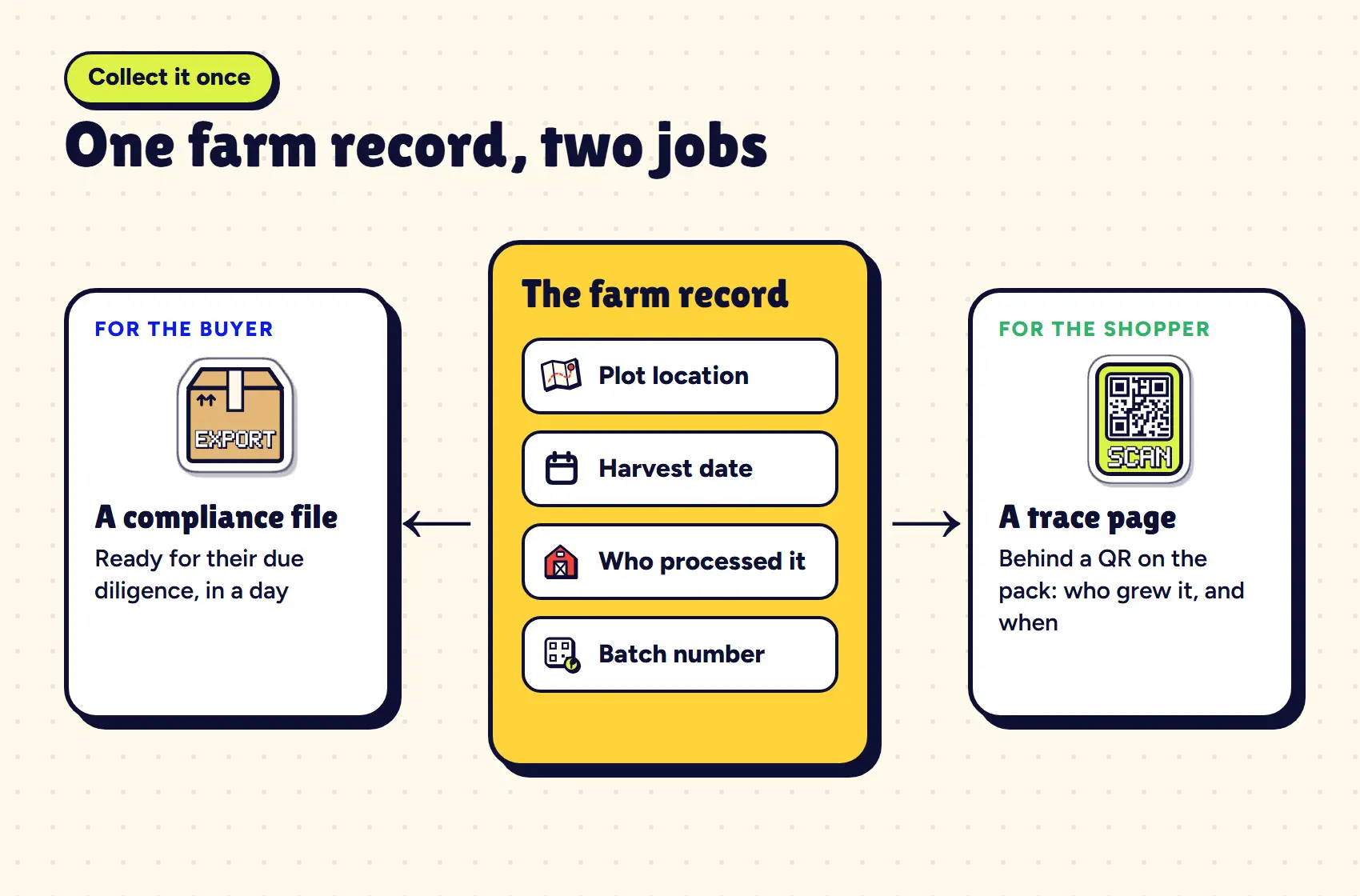
The record a buyer needs (where it was grown, when it was harvested, who processed it, which batch) is also the most persuasive story you can tell a customer. Put a QR code on the pack and the same record becomes a page that shows a shopper the farm, the harvest date and the people behind it.
Start now, even if you don't sell to Europe
- Pin every plot. A phone's map pin is enough for a small plot. Record it with the farmer's name.
- Give every batch a number and write it on the sack, the invoice and the pack.
- Keep one simple list of who you bought from and who you sold to, with dates.
- Ask your buyers what format they want, before they ask you.
Cashew, rice and pepper aren't covered by the EUDR, but export buyers ask about origin for all of them. The same records answer those questions too. This note is a summary, not legal advice, so confirm the details for your products with your buyer or an adviser.
 That's the note. Plant it somewhere.

Menghorng founded Lify in to give Cambodian harvests a name, and writes about brands, search, social media and payments for farm and food businesses.