Plenty of Cambodian businesses talk to customers in Khmer and publish their websites in English. That gap is one of the simplest SEO openings left in this market.
Plenty of Cambodian businesses run on two languages. The conversations with customers happen in Khmer, on Facebook and Telegram, while the website stays in English because English feels more professional.
Search doesn't reward what feels professional. It rewards the page that matches what someone typed.
People search in three ways
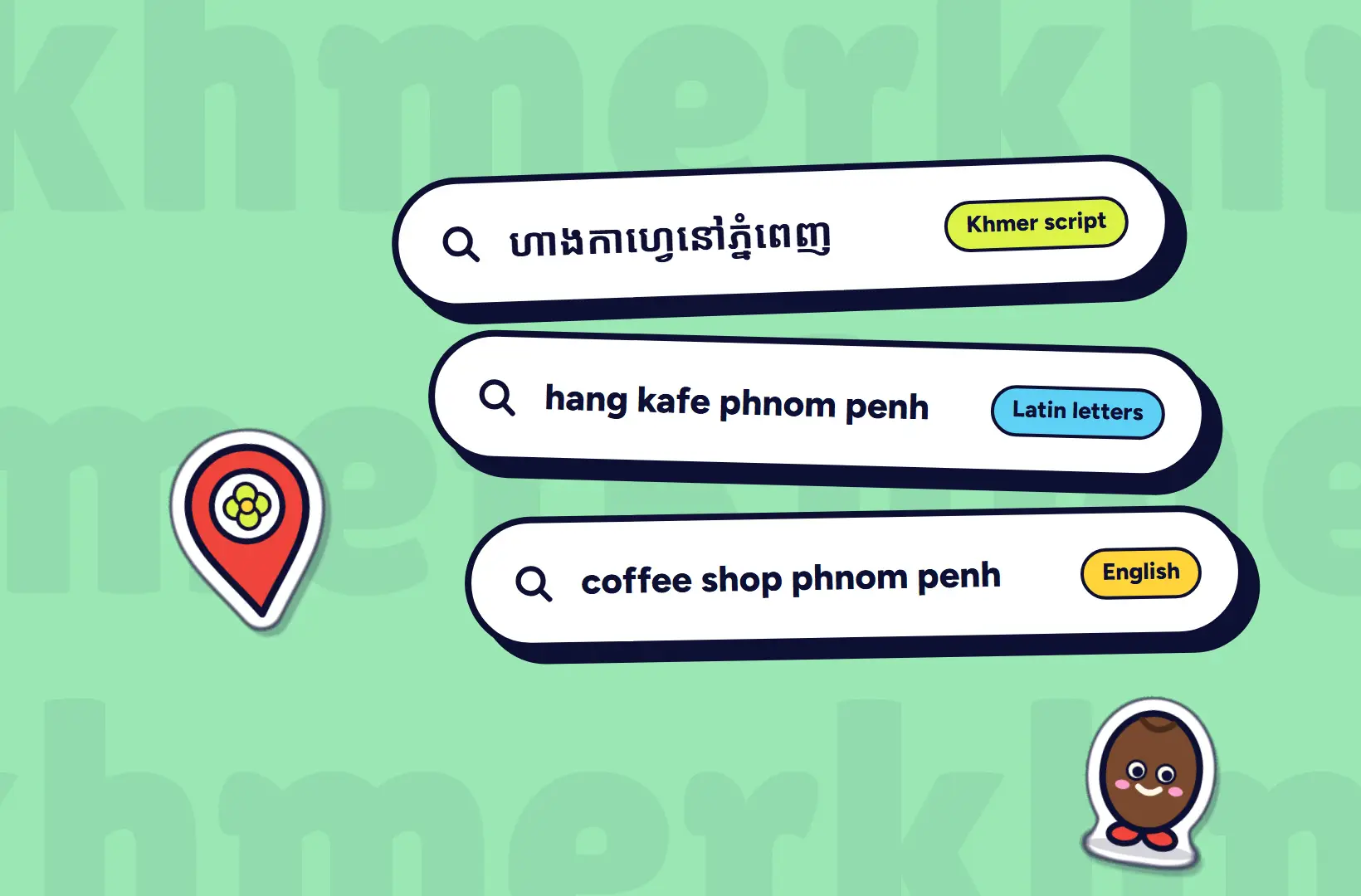
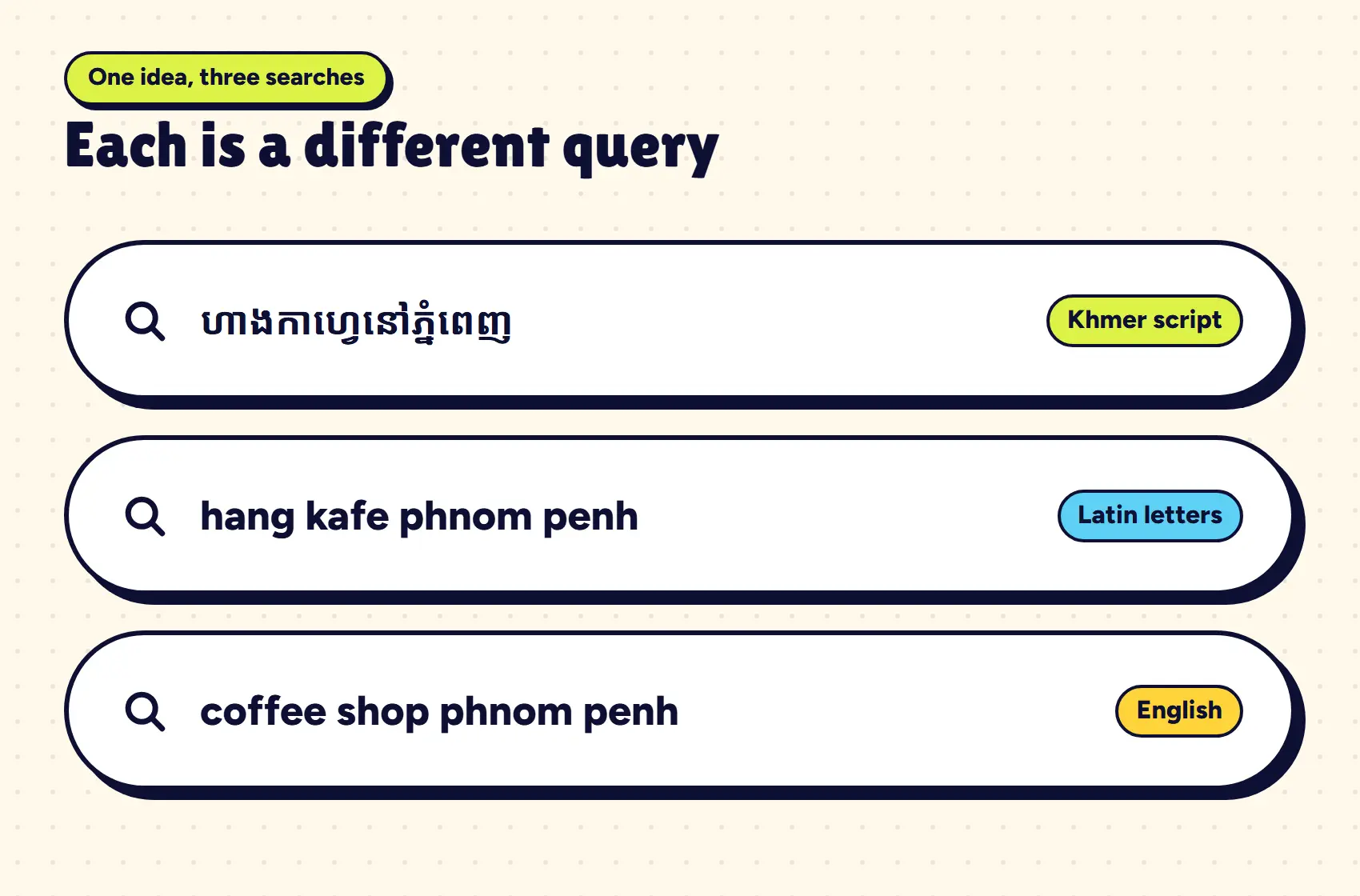
There isn't one Cambodian search habit. Someone looking for a coffee shop might type in Khmer script, in Khmer spelled with Latin letters, or in English. Each of those is a different query, and a page that only covers one of them is invisible to the other two.
Before you write anything, list the phrases your customers really use. Your own chat history is the best keyword tool you have, because it records how people ask in their own words.
Write the page, not a translation
A word-for-word translation from English reads like one. Good Khmer pages are written for Khmer readers, with local examples, local prices and the terms people actually say, even when those terms are borrowed from English.
Give each language its own URL as well, so search engines can treat them as separate pages and link the two versions together with hreflang tags. Avoid a single page that switches language with a button and keeps one address.
Three mistakes that hide Khmer content
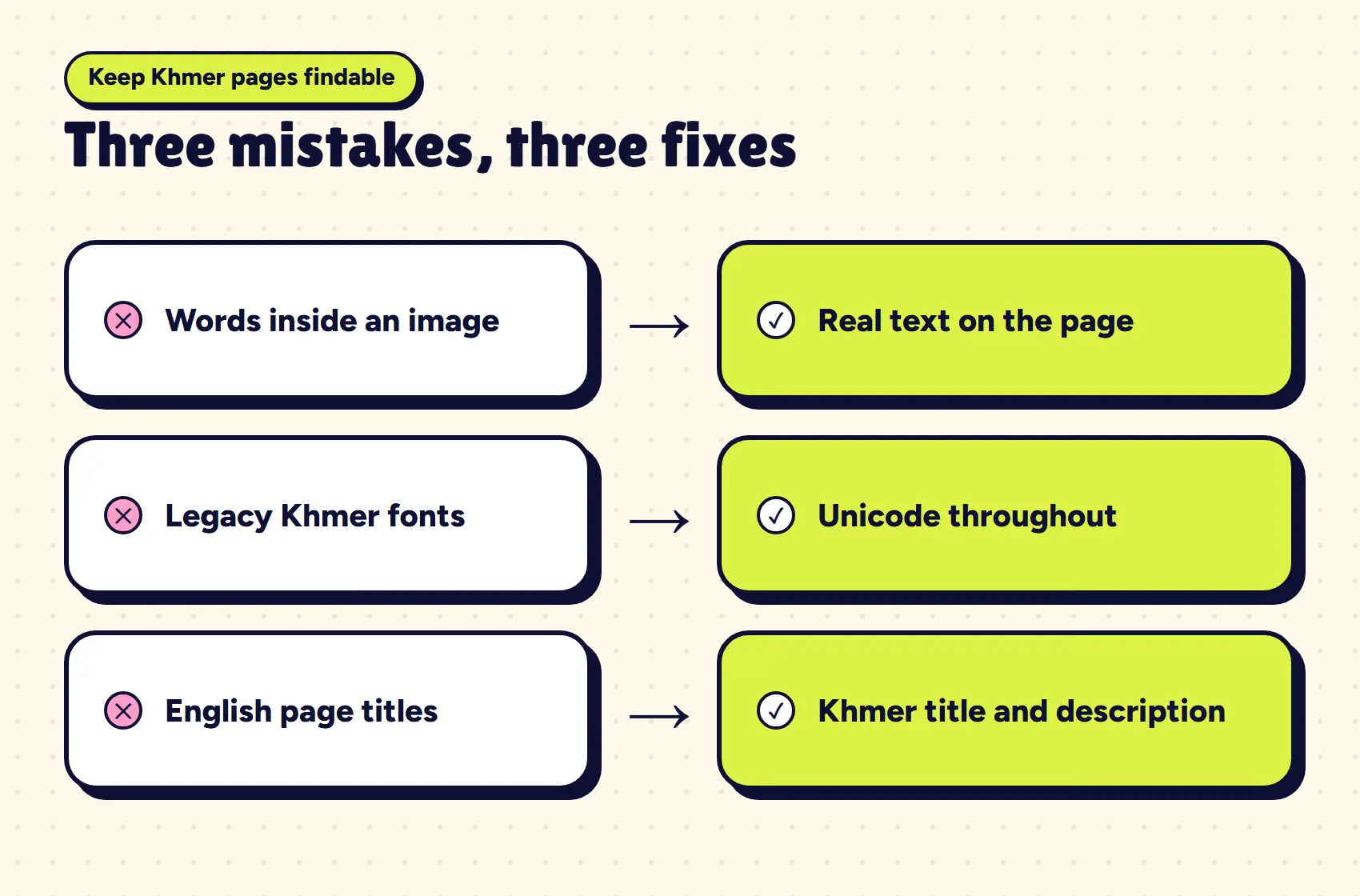
- Text inside images. A beautifully designed poster is a picture to a search engine. Put the words on the page as real text too.
- Old fonts. Legacy Khmer fonts such as Limon aren't Unicode, so the text can't be searched or copied properly. Use Unicode throughout.
- Missing titles and descriptions. Translated pages often keep their English titles. Write the Khmer title and meta description separately.
Why it's worth doing now
The people searching in Khmer are often the ones who never get shown a good result. A page that answers them clearly stands out, and it can keep working long after the budget for a boosted post has run out.
Start small. Choose your five most important services, write one proper Khmer page for each, and link to them from where you already talk to customers.
 That's the note. Plant it somewhere.

Menghorng founded Lify in to give Cambodian harvests a name, and writes about brands, search, social media and payments for farm and food businesses.