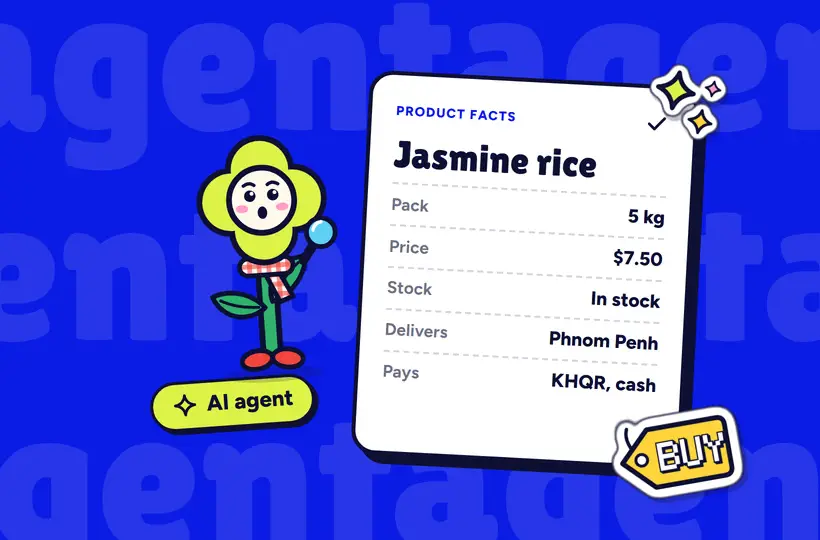
In Cambodia, many sales start with an ad and finish in Messenger or Telegram with a KHQR scan. Your dashboard stops at the message, so it undercounts what works.
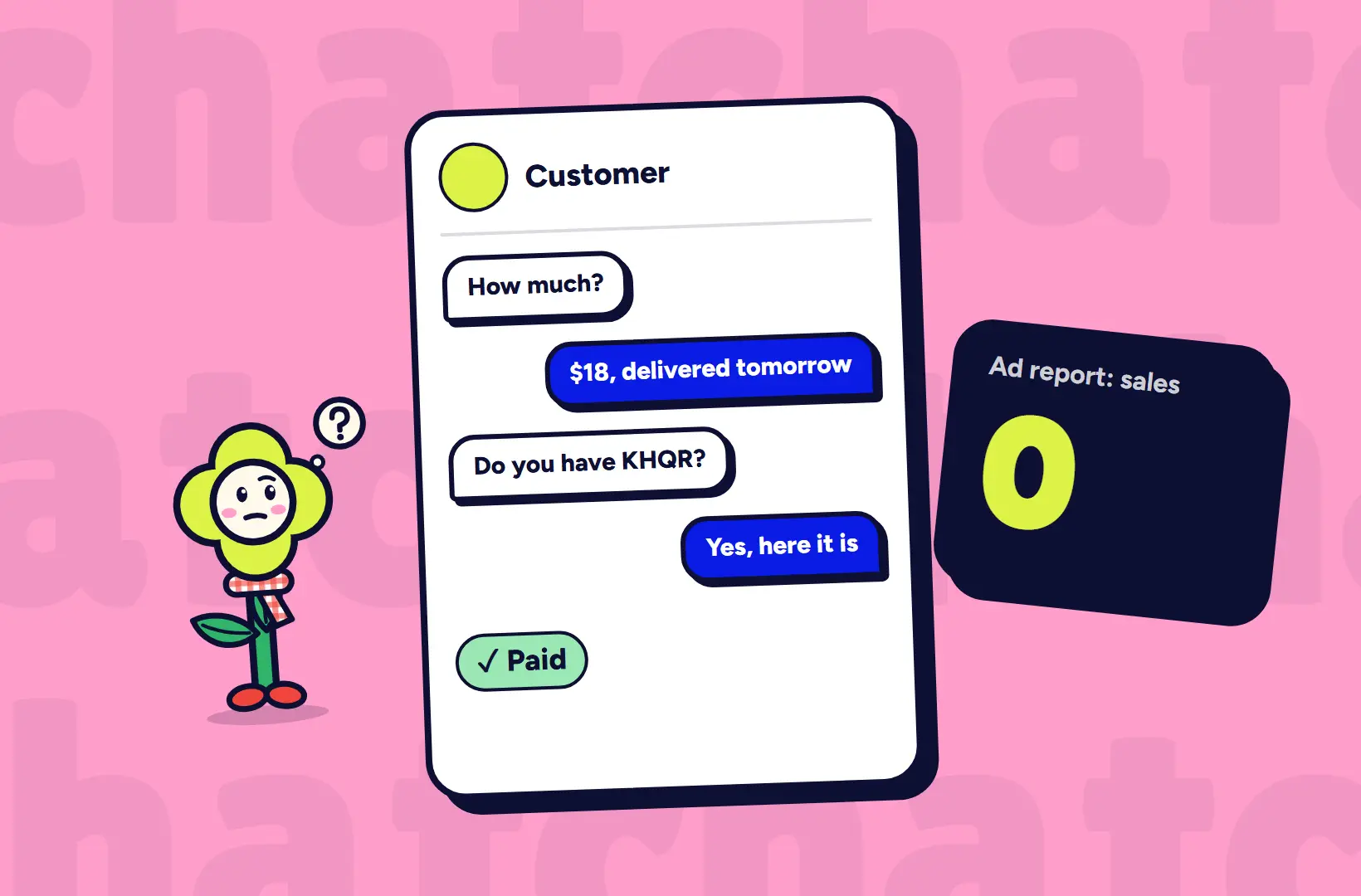
Ask a Phnom Penh shop owner how sales really happen and you'll hear a familiar story. A customer sees a video, sends "how much?", asks about delivery, pays by KHQR and sends a screenshot. The whole sale takes place in a conversation.
Now look at the ad report for that same sale. It shows a message, and that's where it ends.
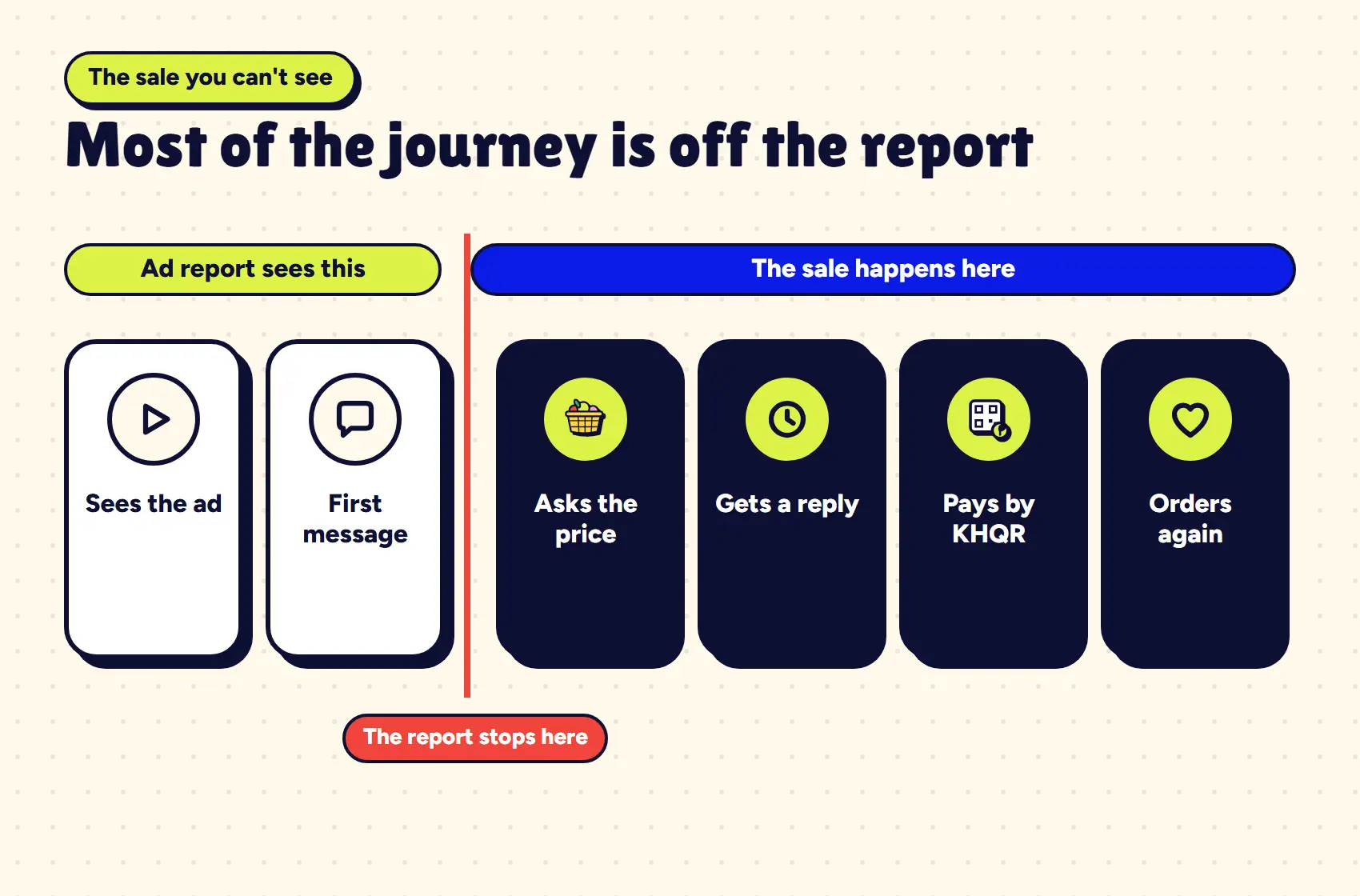
The sale happens where the report stops
Dashboards are built around things that happen on a website: a view, an add-to-cart, a purchase. When the purchase happens in a chat, the platform can't see the money change hands. It knows you started a conversation, and little else.
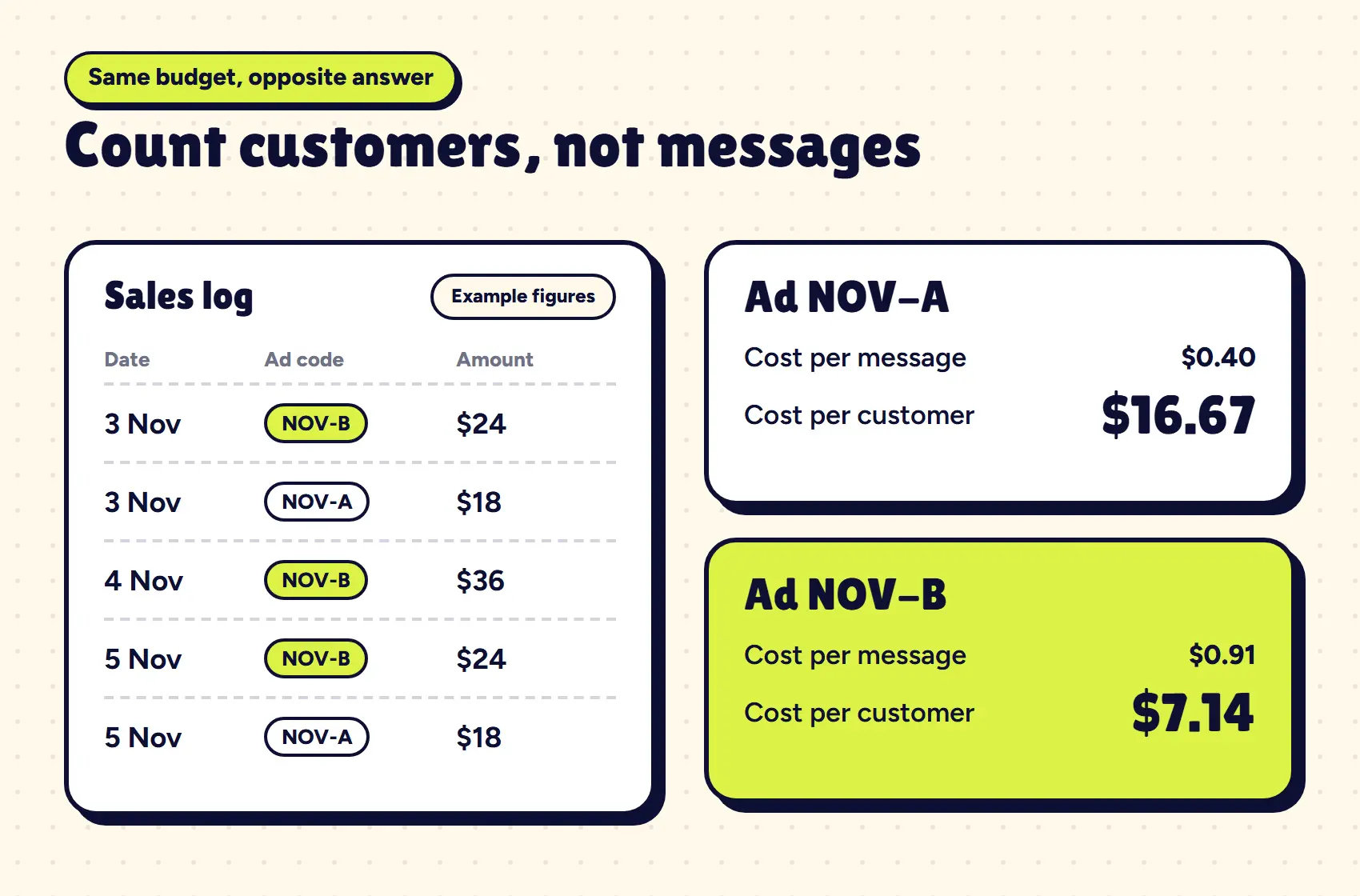
So an ad that brings 20 serious buyers can look worse than one that brings 200 people asking the same free question. Judge those two ads by the dashboard and you'll turn off the wrong one.
Cost per message is a trap
It's tempting to optimise for the number you can see. Cheaper messages feel like progress, and the platform will happily find you more people who like sending them. But a message is an expression of interest, not a sale, and the two can drift a long way apart.
The number you actually want is cost per paying customer. You only need one more piece of information to work it out.
The cheapest fix is a shared sheet
You don't need new software to begin. You need a habit.
- Give each ad a short code. Add it to the ad's welcome message or link, such as "NOV-A".
- Log every paid order. Date, code, amount and whether they've bought before.
- Total it weekly. Add up sales per code, and divide spend by paying customers.
Most teams can start this today, and the first month of data is usually more useful than a year of cost-per-message reports.
Reply speed is part of the ad
Once you can see sales, something else shows up: the team member who answers matters as much as the creative. A warm reply in two minutes turns the same ad into more customers than a perfect reply the next morning.
That's why we report on leads and sales rather than likes. Chat is where a lot of Cambodian marketing gets paid for, so it should be in the numbers.
 That's the note. Plant it somewhere.

Menghorng founded Lify in to give Cambodian harvests a name, and writes about brands, search, social media and payments for farm and food businesses.