- Field & community
- App
- 2024
Rean Kui
A Kui–Khmer–English dictionary for phones, with recordings of how each word is said.



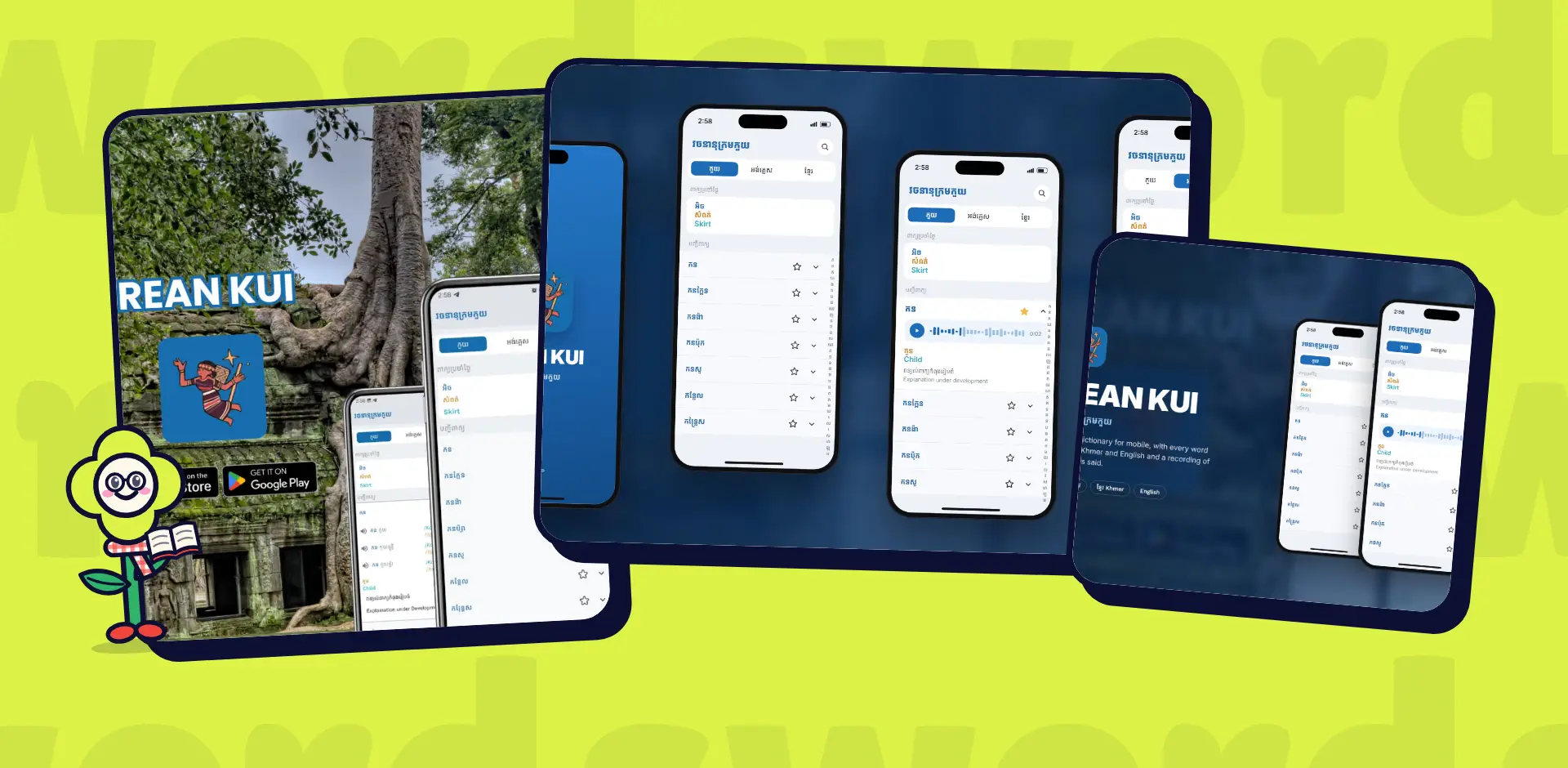
Where it started.
Kui is spoken by Indigenous communities in northern Cambodia, but very little of it is written down or online. A Kui speaker, a Khmer speaker and an English-speaking visitor had no shared place to look up a word, and a written word alone could not tell anyone how it sounds. Rean Kui set out to put the vocabulary in one app on the phones people already carry.
Three things it had to get right.

Three languages, three starting points
Some people know the Kui word and want its meaning, others start from Khmer or English. The dictionary had to work from any of the three without becoming three separate apps.

A spoken language
Kui written in Khmer script does not show how a word is pronounced, so entries needed a recording, not just a spelling.

Familiar order
Readers look words up in the order of the Khmer alphabet, so the word list had to be ordered and browsable the same way.
How we made it.
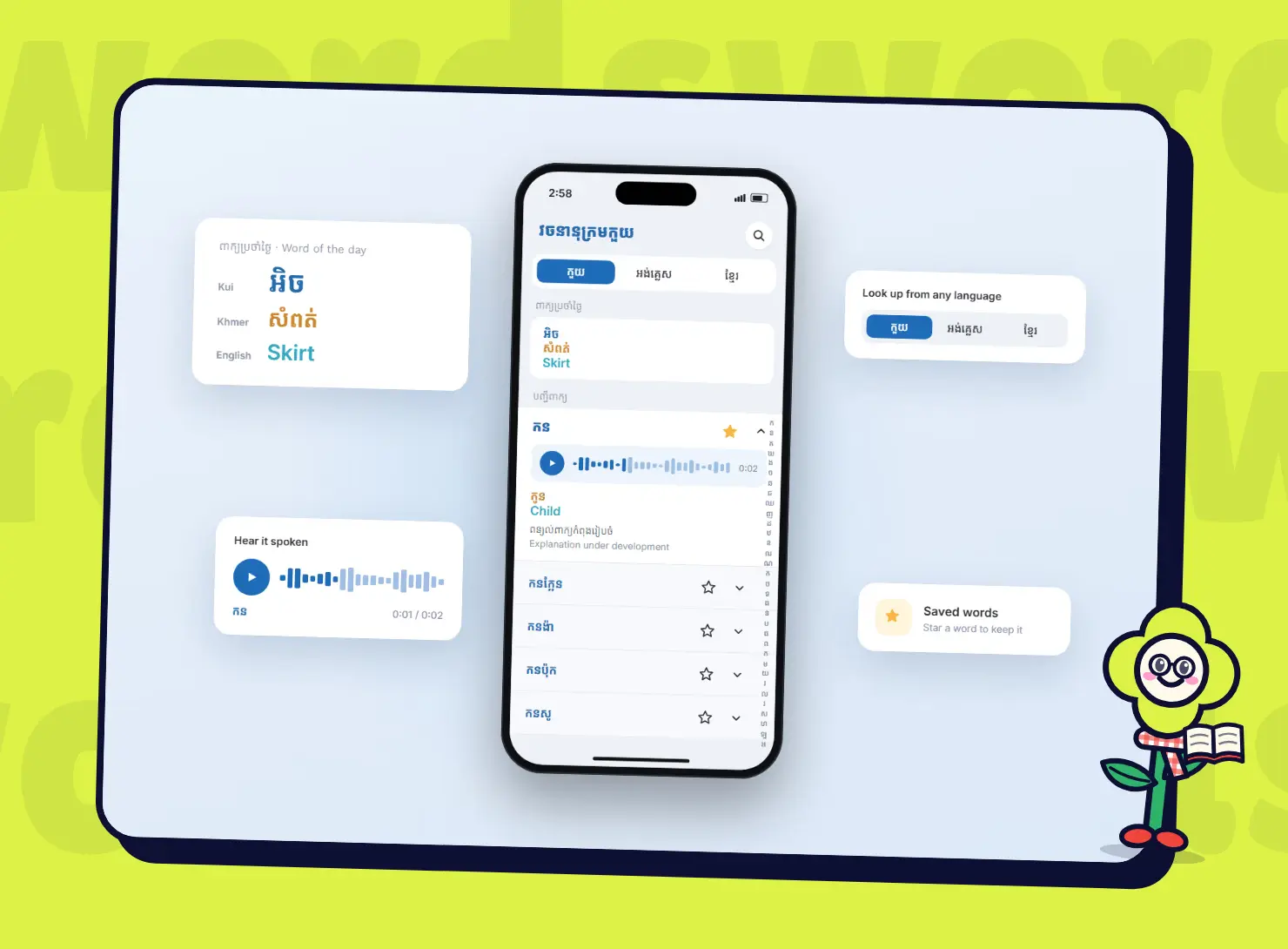
We designed the app around a single word list with a switch at the top for Kui, English and Khmer, so the same dictionary can be searched from whichever language someone knows. Each word opens in place to show a recording with a play button, the Khmer and English meanings, and room for an explanation that grows as the content is written. A Khmer alphabet index down the side jumps straight to a letter, a word of the day sits at the top of the home screen to give people a reason to come back, and a star saves a word for later. The look comes from the app icon, a Kui woman carrying a woven basket on a blue tile, with the interface in the same blue and Kui, Khmer and English set apart by colour.
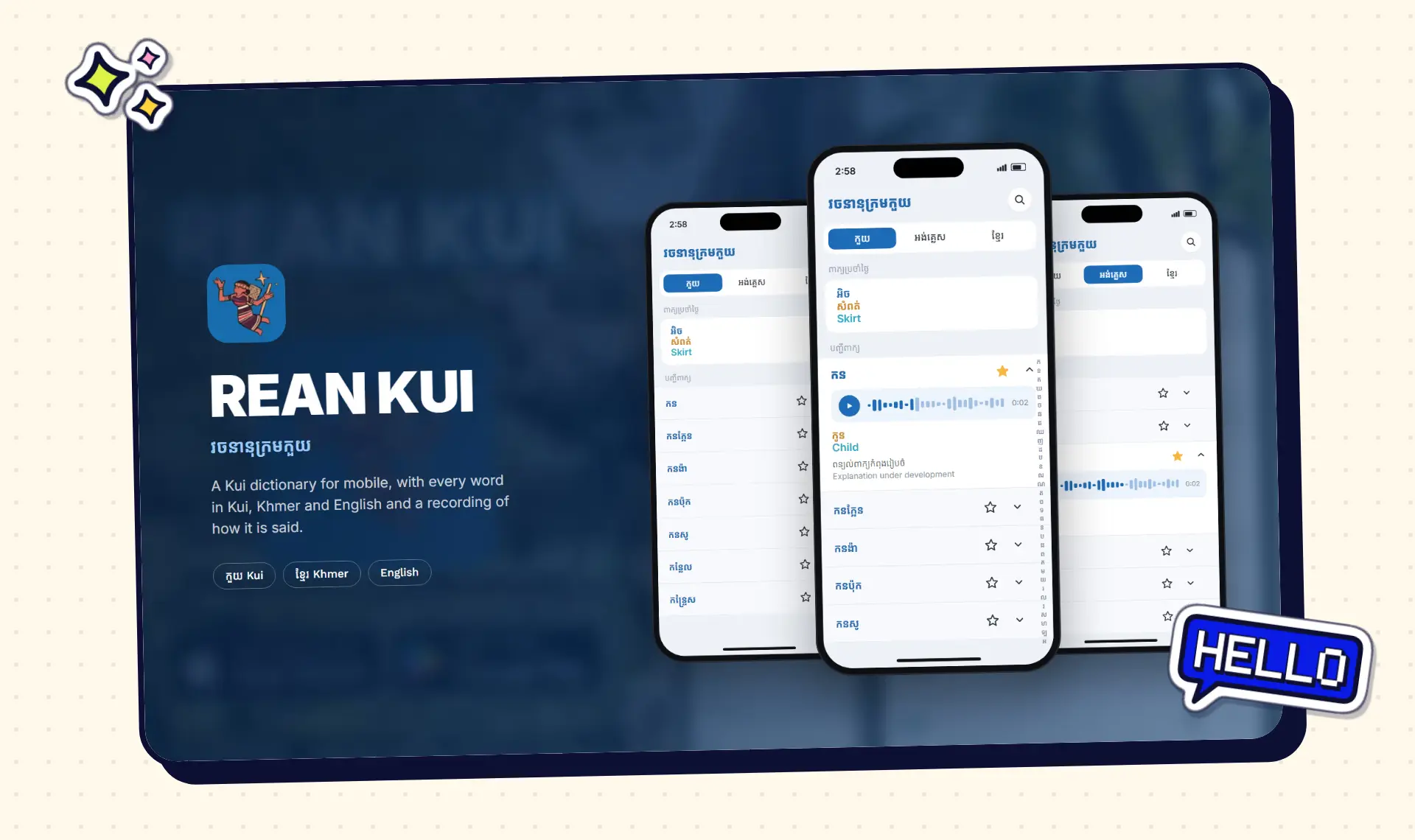
- TypeMobile dictionary app for iOS and Android
- BuiltKui, Khmer and English lookup, audio recordings, a Khmer alphabet index, word of the day and saved words
- LanguagesKui, Khmer and English
Kui has a dictionary people can carry in their pocket, where a word can be looked up from Kui, Khmer or English and heard as it is spoken.


 info@lifydigital.com